



P2Y2 Receptor
P2Y2 receptor is a GPCR activated by extracellular ATP and UTP, linking nucleotide sensing to calcium mobilization, cytokine release, wound healing, cell migration, and tissue repair[1]. Mechanistically, ATP/UTP stimulation activates PLC/PKC, PI3K/PKCε, ERK1/2, p38-MAPK, RAFTK, Shc-Grb2, and EGFR-ERK1/2 signaling, connecting P2Y2 receptor activation with proliferation, inflammation, and stress responses[2][3][4][5]. In disease models, P2Y2 receptor deficiency worsens renal ischemia-reperfusion injury, fibrosis, tubular senescence, apoptosis, and inflammation, whereas P2Y2 activation supports intestinal epithelial migration, microtubule stabilization, mucosal re-epithelization, and colitis remission[6][7]. Conversely, P2Y2 receptor blockade reduces neutrophil infiltration, hepatocyte death, alcoholic liver inflammation, ALT/AST elevation, TNF-α, IL-1β, and EGFR-ERK1/2 phosphorylation in liver injury models[5][8]. Compared with related isoforms, P2Y2 shows ATP/UTP-responsive calcium signaling, whereas human P2Y4 is activated by UTP but not ATP, and P2Y1 is ADP-specific[9][10]. For experimental applications, CaCC/Ano1 fluorescence models detect P2Y2-dependent intracellular calcium changes for high-throughput regulator screening, while AR-C118925 provides a potent selective non-nucleotide P2Y2 antagonist[11][12].
References:
- [1]. Salarpour F, et al. P2Y2 Receptor Signaling in Health and Disease. Int J Mol Sci. 2025 Oct 9;26(19):9815. [Content Brief]
- [2]. Muscella A, et al. Activation of P2Y2 receptor induces c-FOS protein through a pathway involving mitogen-activated protein kinases and phosphoinositide 3-kinases in HeLa cells. J Cell Physiol. 2003 May;195(2):234-40. [Content Brief]
- [3]. Huwiler A, et al. Extracellular nucleotides activate the p38-stress-activated protein kinase cascade in glomerular mesangial cells. Br J Pharmacol. 2000 Feb;129(3):612-8. [Content Brief]
- [4]. Soltoff SP, et al. Activation of P2Y2 receptors by UTP and ATP stimulates mitogen-activated kinase activity through a pathway that involves related adhesion focal tyrosine kinase and protein kinase C. J Biol Chem. 1998 Jan 30;273(5):2653-60. [Content Brief]
- [5]. Liu ZN, et al. Blockade of the P2Y2 Receptor Attenuates Alcoholic Liver Inflammation by Targeting the EGFR-ERK1/2 Signaling Pathway. Drug Des Devel Ther. 2022 Apr 13;16:1107-1120. [Content Brief]
- [6]. Jeong K, et al. Deficiency of purinergic P2Y2 receptor impairs the recovery after renal ischemia-reperfusion injury and accelerates renal fibrosis and tubular senescence in mice. Sci Rep. 2024 Dec 30;14(1):31932. [Content Brief]
- [7]. Degagné E, et al. P2Y2 receptor promotes intestinal microtubule stabilization and mucosal re-epithelization in experimental colitis. J Cell Physiol. 2013 Jan;228(1):99-109. [Content Brief]
- [8]. Ayata CK, et al. Purinergic P2Y₂ receptors promote neutrophil infiltration and hepatocyte death in mice with acute liver injury. Gastroenterology. 2012 Dec;143(6):1620-1629.e4. [Content Brief]
- [9]. Kennedy C, et al. ATP, an agonist at the rat P2Y(4) receptor, is an antagonist at the human P2Y(4) receptor. Mol Pharmacol. 2000 May;57(5):926-31. [Content Brief]
- [10]. Ciglenecki I, et al. Low sensitivity of the fourth-generation antigen/antibody HIV rapid diagnostic test Determine™ HIV Early Detect for detection of acute HIV infection at the point of care in rural Eswatini: a diagnostic accuracy study. J Int AIDS Soc. 2025 Jul;28(7):e26517. [Content Brief]
- [11]. Wu M, et al. Establishment of a Cell Model for Dynamic Monitoring of Intracellular Calcium Concentration and High-Throughput Screening of P2Y2 Regulators. Molecules. 2022 May 7;27(9):3003. [Content Brief]
- [12]. Kindon N, et al. From UTP to AR-C118925, the discovery of a potent non nucleotide antagonist of the P2Y2 receptor. Bioorg Med Chem Lett. 2017 Nov 1;27(21):4849-4853. [Content Brief]
-
P2Y2 Receptor Related Products (13)
Related Products (13)

- 1
-
Diquafosol tetrasodium
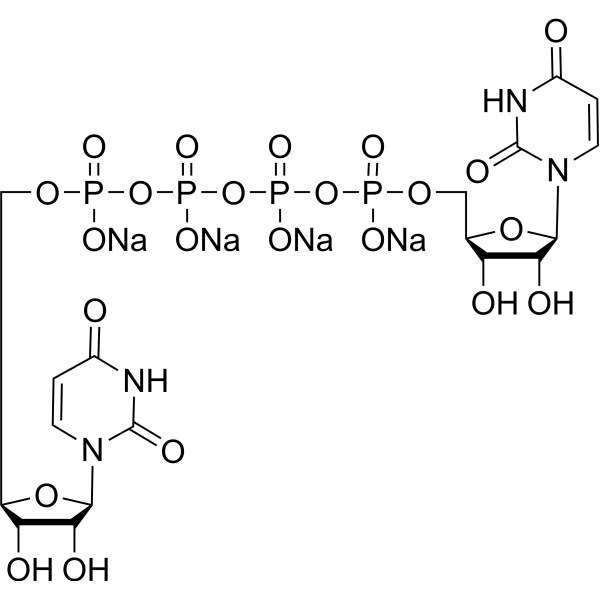 0 ImagesSynonyms: INS365Diquafosol tetrasodium is a P2Y2 receptor agonist that stimulates fluid and mucin secretion on the ocular surface, as a topical treatment of dry eye disease.
-
AR-C118925XX
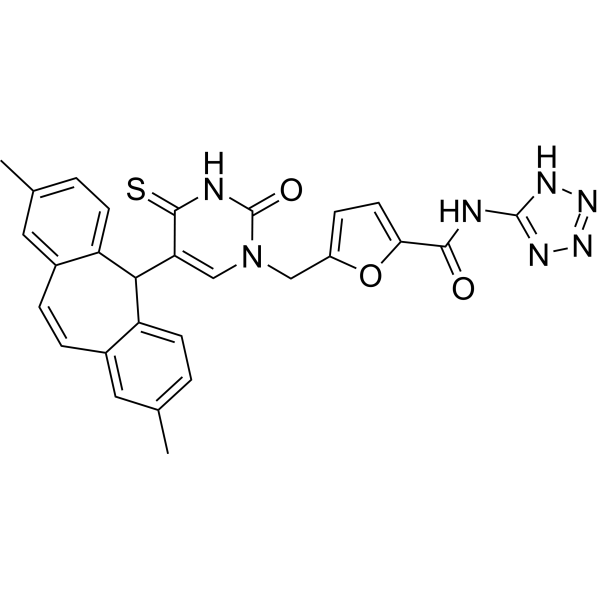 0 ImagesAR-C118925XX is a selective P2Y2 receptor antagonist. AR-C118925XX inhibits ATP-induced IL-6 production and phosphorylation of p38. AR-C118925XX also inhibits Bleomycin (HY-108345)-induced dermal fibrosis in mice. AR-C118925XX also inhibits ATP-induced tumor growth.
-
4-Thiouridine 5′-triphosphate tetralithium
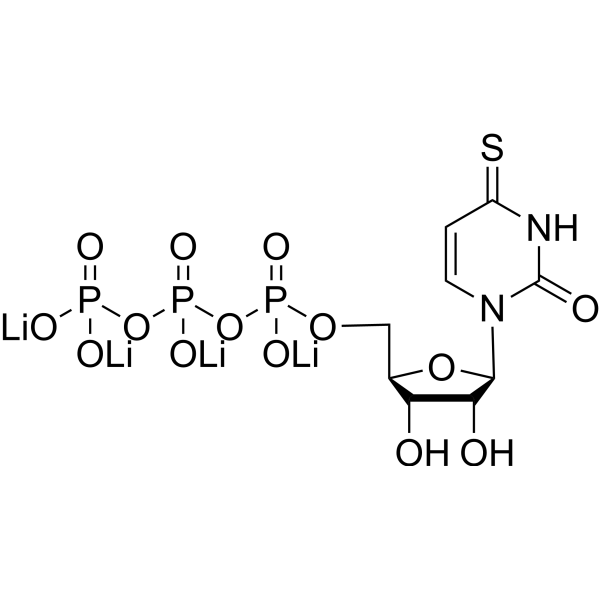 0 ImagesCat. No.: HY-154840CAS No.: 20188-72-1Synonyms: 4-Thio-UTP tetralithium4-Thiouridine 5′-triphosphate (4-Thio-UTP) tetrasodium (Compound 15) is a UTP analog and potent P2Y2 and P2Y4 agonist with EC50 values of 35 and 350 nM for hP2Y2 and hP2Y4, respectively. 4-Thiouridine 5′-triphosphate tetrasodium can be used in cross-linking experiments and transcriptional complex labeling studies.
-
P2Y14R antagonist 1
 0 ImagesP2Y14R antagonist 1 (compound I-17) is a selective P2Y14R antagonist with an IC50 of 0.6 nM. It exhibits potent P2Y14R antagonistic activity, both in vitro and in vivo efficacy, and favorable pharmacokinetic profiles. P2Y14R antagonist 1 reduces the release of inflammatory factors and cell pyroptosis through the NOD-like receptor family pyrin domain-containing 3 (NLRP3)/gasdermin D (GSDMD) signaling pathway. P2Y14R antagonist 1 holds promise for research in the field of acute gouty arthritis.
-
MRS2768 tetrasodium salt
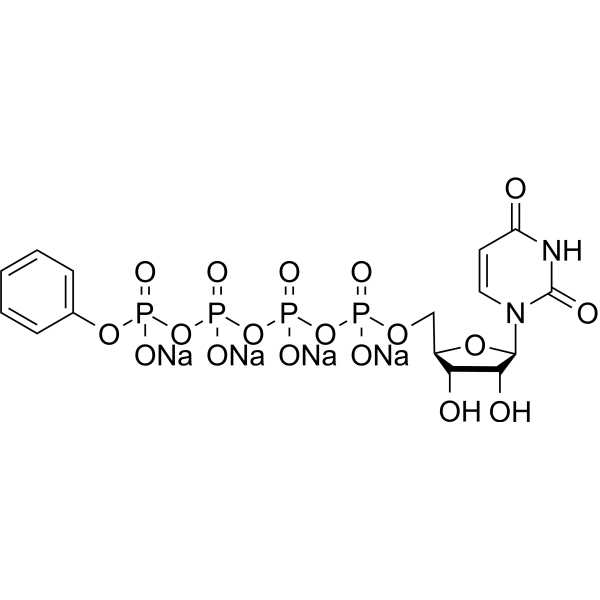 0 ImagesMRS2768 tetrasodium salt is a potent, selective, and metabolically stable P2Y2 receptor agonist with an EC50 of 1.89 μM for the human P2Y2 receptor. MRS2768 tetrasodium salt activates Gq/PLC/PKC signaling, leading to downstream phosphorylation of Akt, eNOS, and ERK, with effects varying by cell type. MRS2768 tetrasodium salt inhibits ENaC via Gq/PKC/Src/Akt to promote natriuresis and lower blood pressure in the kidney. MRS2768 tetrasodium salt activates eNOS to increase NO secretion in endothelial cells. MRS2768 tetrasodium salt drives proliferation via PI3K/Akt in fibroblasts and cancer cells. MRS2768 tetrasodium salt exerts anti-apoptotic effects through PKC/Src/Akt in cardiomyocytes. MRS2768 tetrasodium salt can be applied to investigate P2Y2-dependent pathological processes, including acute kidney injury, chronic kidney disease and renal fibrosis, DOCA-salt induced hypertension, myocardial infarction, pulmonary arterial hypertension, pancreatic cancer, cardiac fibrosis, dry eye disease, as well as shear stress-mediated vascular remodeling and atherosclerosis.
-
P2Y2R antagonist-2
 0 ImagesCat. No.: HY-189243P2Y2R antagonist-2 is an antagonist of the P2Y2 receptor (P2Y2R), with a pKi value of 6.53 for human P2Y2R. P2Y2R antagonist-2 blocks UTPγS (HY-137603)-induced calcium mobilization, binds to the orthosteric site of P2Y2R to displace fluorescent antagonist ligands, and forms unique binding interactions. P2Y2R antagonist-2 has no structural alerts, exhibiting low lipophilicity and high lipophilic efficiency. P2Y2R antagonist-2 can be used in studies related to astrocytoma and inflammation.
-
MRS2768
 0 ImagesCat. No.: HY-108649CAS No.: 1047980-83-5MRS2768 is a potent, selective, and metabolically stable P2Y2 receptor agonist with an EC50 of 1.89 μM for the human P2Y2 receptor. MRS2768 activates Gq/PLC/PKC signaling, leading to downstream phosphorylation of Akt, eNOS, and ERK, with effects varying by cell type. MRS2768 inhibits ENaC via Gq/PKC/Src/Akt to promote natriuresis and lower blood pressure in the kidney. MRS2768 activates eNOS to increase NO secretion in endothelial cells. MRS2768 drives proliferation via PI3K/Akt in fibroblasts and cancer cells. MRS2768 exerts anti-apoptotic effects through PKC/Src/Akt in cardiomyocytes. MRS2768 can be applied to investigate P2Y2-dependent pathological processes, including acute kidney injury, chronic kidney disease and renal fibrosis, DOCA-salt induced hypertension, myocardial infarction, pulmonary arterial hypertension, pancreatic cancer, cardiac fibrosis, dry eye disease, as well as shear stress-mediated vascular remodeling and atherosclerosis.
-
Uridine-5'-O-3-thiotriphosphate tetrasodium
 0 ImagesCat. No.: HY-137603ASynonyms: UTPγS tetrasodiumUridine-5'-O-(3-thiotriphosphate) (UTPγS) tetrasodium, a stable analogue of Uridine triphosphate (UTP) (HY-107372), is a potent agonist of the P2Y2 and P2Y4 receptors with increased metabolic stability. Uridine-5'-O-(3-thiotriphosphate) tetrasodium stimulates inositol phosphate formation in human 1321N1 astrocytoma cells stably expressing the phospholipase C-coupled human P2U-purinoceptor (EC50 = 240 nM).
-
Sp-UTP-α-S tetrasodium
 0 ImagesCat. No.: HY-137612ASynonyms: Uridine 5'-O-1-thiotriphosphate tetrasodium
-
Diquafosol
 0 ImagesCat. No.: HY-B0606ACAS No.: 59985-21-6Synonyms: INS365 free baseDiquafosol (INS365 free base) is a potent P2Y2 agonist. Diquafosol nhibits apoptosis and decreases ROS generation. Diquafosol has the potential for the research of dry eye.
-
Sp-UTP-α-S
 0 ImagesCat. No.: HY-137612CAS No.: 71214-29-4Synonyms: Uridine 5'-O-1-thiotriphosphate
-
2-Thio-UTP
 0 ImagesCat. No.: HY-116307CAS No.: 35763-29-22-Thio-UTP is a selective P2Y2 inhibitor with an EC50 value of 50 nM. 2-Thio-UTP reduces pro-fibrotic gene expression and protein α-smooth muscle actin. 2-Thio-UTP has the potential for the research of calcific aortic valve stenosis (CAVS) .
-
4-Thiouridine 5′-triphosphate tetrasodium
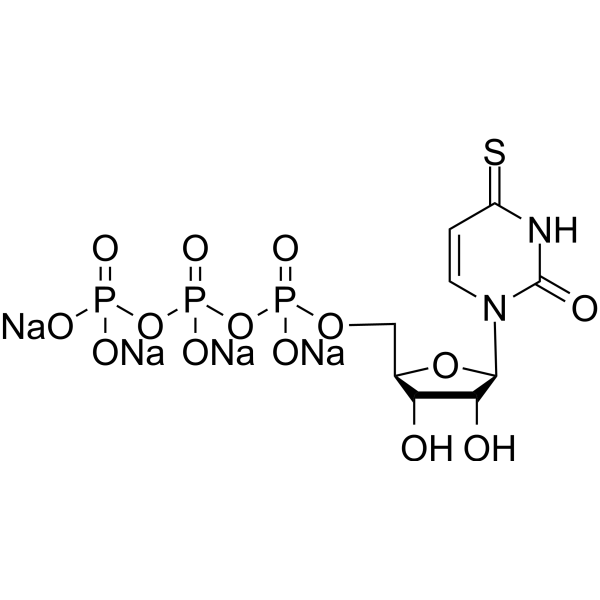 0 ImagesCat. No.: HY-154840ACAS No.: 68507-49-3Synonyms: 4-Thio-UTP tetrasodium4-Thiouridine 5′-triphosphate (4-Thio-UTP) tetralithium (Compound 15) is a UTP analog and potent P2Y2 and P2Y4 agonist with EC50 values of 35 and 350 nM for hP2Y2 and hP2Y4, respectively. 4-Thiouridine 5′-triphosphate tetralithium can be used in cross-linking experiments and transcriptional complex labeling studies.
- 1



